I started with the vague idea of using silk casting to make indigo dyed miniature Japanese script. I wasn’t sure what the text would be but it seemed like a sensible first step to try making small letter/character molds.
The Stanford SNF facility has a high-resolution laser cutter and I thought it seemed like that could be an easy option to start with, compared to any sort of lithographic or nano-stamping process. After going through all the SNF on-boarding process and getting trained on the laser cutter, I started making test molds like these:


The upper image above is a microscope photo (300x) of characters cut in acrylic; lower-left is a photo of characters cut in aluminum (fingernail for scale). The lower-right photo shows an early attempt to try to get silk fibroin solution to flow into character molds cut in acrylic–surface tension was an evident issue especially for really small molds…
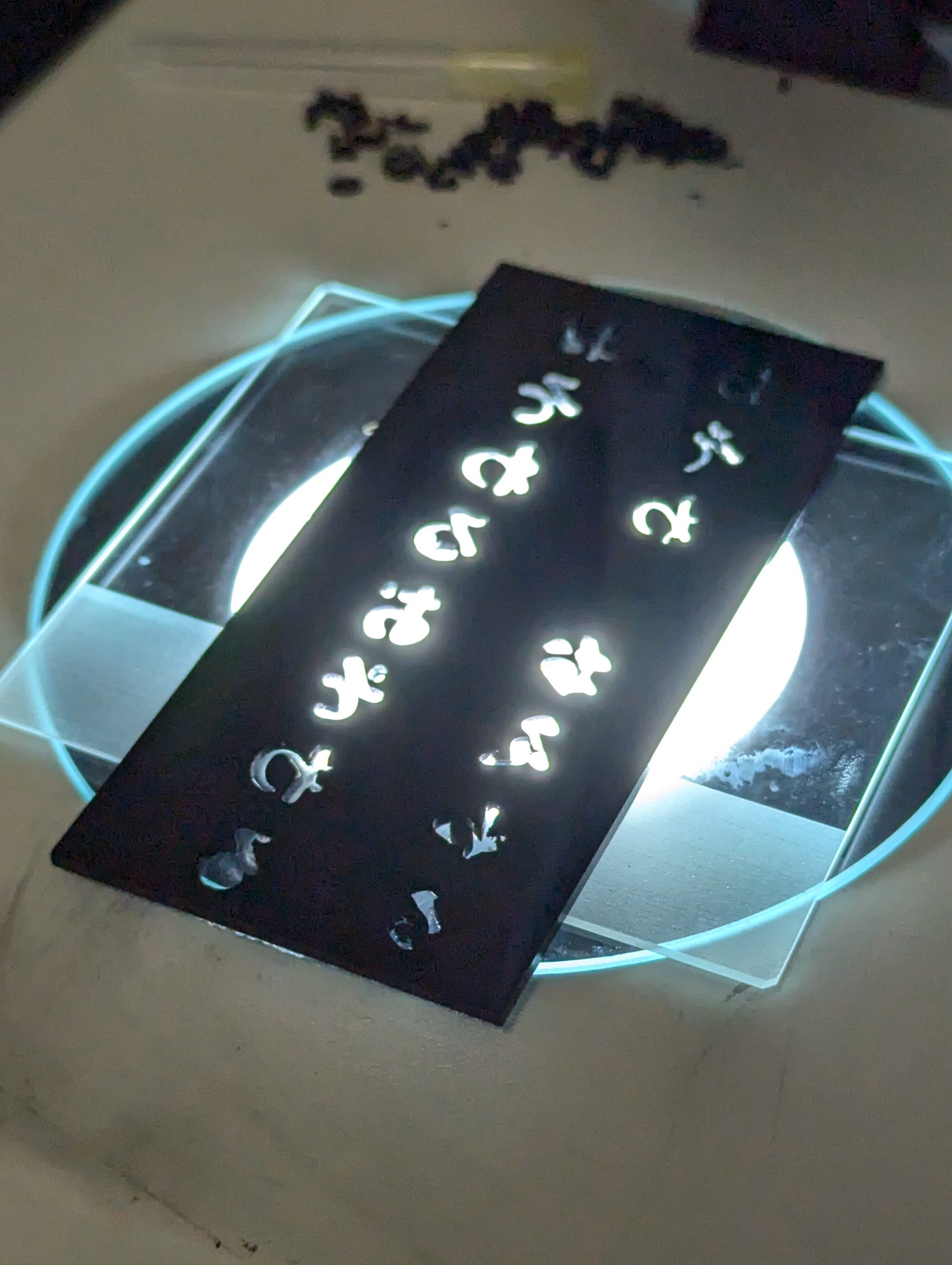
I spent some time working with rather large character molds, trying various methods of casting silk in them and stabilizing the hydrogel via soaking in methanol and other tricks I found in the literature, using what I must say I thought were some pretty clever constructions using dialysis tubing and double-sided tape, but couldn’t seem to figure out a good way to de-mold them! The following image shows some large character molds (upside-down) with the silk hydrogel casts still stuck in them.
I turned to an alternative strategy of trying to laser-cut characters directly out of dried silk fibroin. The following photo shows the result of pouring silk fibroin solution into a glass dish, letting it dry out, and then cutting character forms directly in the laser cutter with varying speeds and powers:

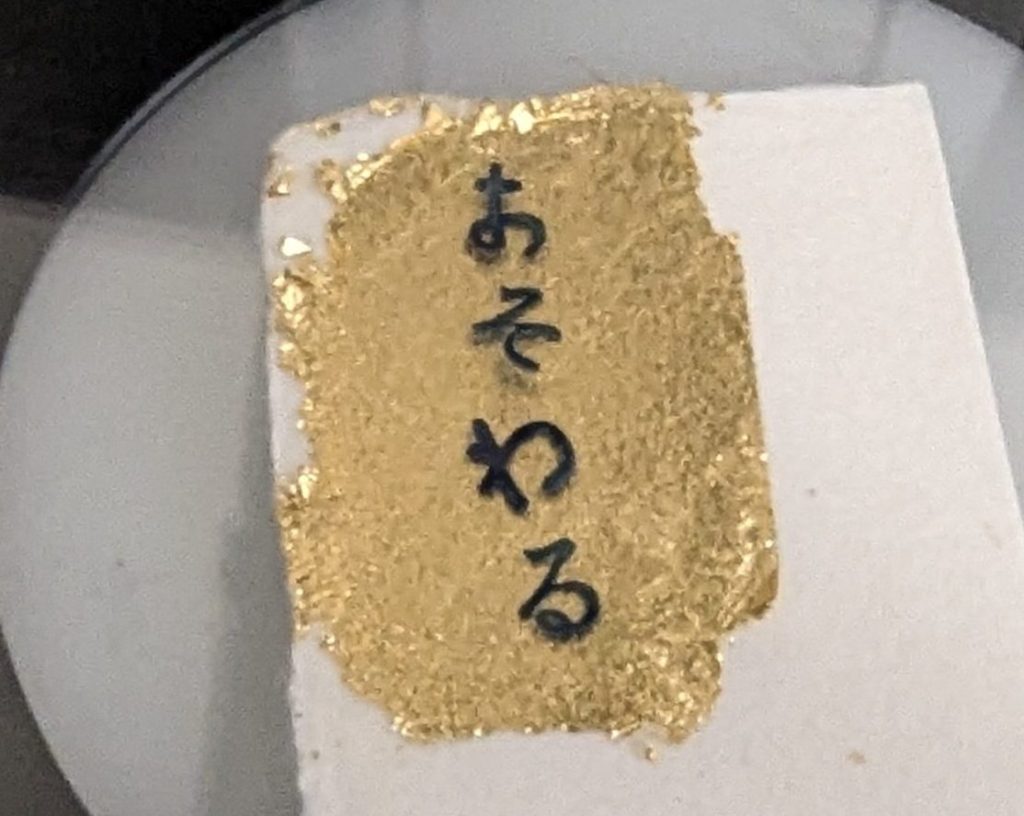
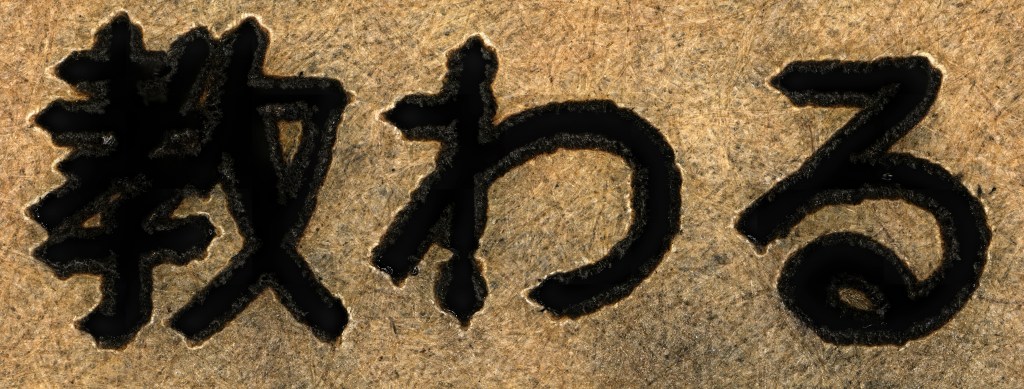
I then rehydrated the entire film and pulled out some of the better-looking character forms with a pair of tweezers. These were pretty robust and could be indigo dyed. They even re-dried flat, which is more than I can say about most other processes I’ve been trying! The furthest I got with this approach was laying some of these letters on a piece of gold foil, as a mock-up of how a final art piece might look (right image is the letters on gold foil; left is the same letters still floating in a dish of water):

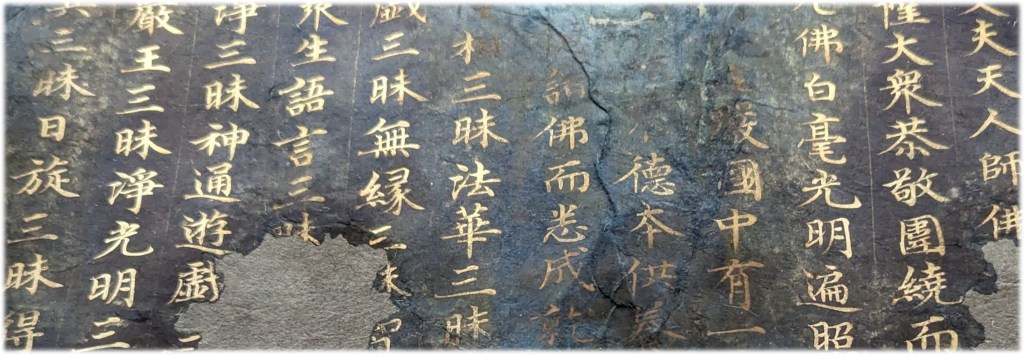
Not great but not without potential. The inspiration for the gold foil was trying to invert the appearance of Japanese/Korean/Chinese calligraphy that used gold ink on indigo-dyed paper:
There were some serendipitous moments working on this idea:

…the above picture shows some silk fibroin hydrogel still stuck in the black acrylic mold; something about the lighting gave the silk letters a gold cast.
For a while I thought about making and breaking some Korean Silla-style ceramics, repairing them via kintsugi with gold repair lines, and then laying indigo-dyed miniature silk text along the gold lines. That would be interesting to try sometime but I never came up with a solid connection of that visual scheme to the main themes of this project.

 Silkpunk Dogu - Stanford VPA Faculty Creative Project 2023-2025